


Common Quality Myths That Slow Down Innovative Teams
July 6, 2026
The Regulatory Readiness Checklist: What Should Be in Place Before You Scale
July 6, 2026Common Quality Myths That Slow Down Innovative Teams
July 6, 2026The Regulatory Readiness Checklist: What Should Be in Place Before You Scale
July 6, 2026In the EU life sciences landscape, design inputs are more than just technical statements; they are the backbone of compliance, safety, and product success. Under regulations like MDR and IVDR, poorly written requirements don’t just create internal confusion; they can directly impact your ability to achieve CE marking and scale across European markets.
What often causes problems is not a lack of effort, but a false sense of clarity. Many requirements sound correct, even professional, but fall apart during verification and validation because they are vague, unmeasurable, or disconnected from real user needs. Below are seven common types of design inputs that fail—explained with a mix of practical insight and structured takeaways to help you avoid them.
1. Vague Requirements That Sound Good but Mean Nothing
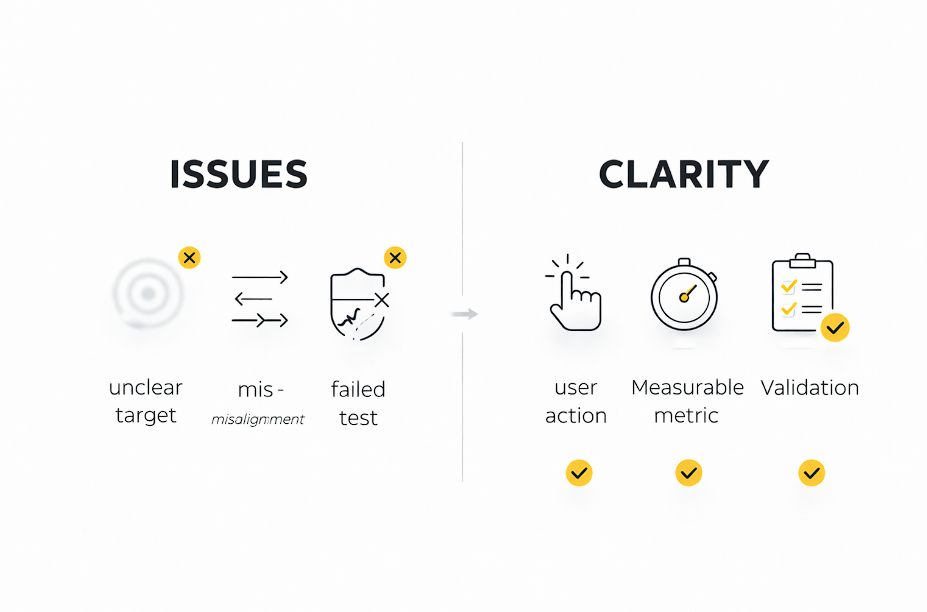
At first glance, vague requirements feel acceptable because they align with general expectations. Terms like “user-friendly” or “efficient” are commonly used, but they lack the precision needed for regulatory compliance.
These types of inputs create confusion across teams. Engineers interpret them one way, testers another, and regulators see them as insufficient.
Where things go wrong:
- No clear definition of success
- Different interpretations across teams
- Failure during usability validation
What better looks like:
Instead of relying on subjective language, requirements should clearly define expected outcomes in a measurable way.
- Replace generic terms with specific user actions
- Define time, accuracy, or usability thresholds
- Ensure the requirement can be tested objectively
A strong requirement removes ambiguity and aligns everyone, from development to regulatory reviewers.
2. Requirements Without Measurable Criteria
A requirement that cannot be measured is one of the fastest ways to fail verification. In the EU regulatory environment, every claim must be supported by evidence.
Statements like “high performance” or “reliable system” may sound impressive, but they provide no benchmark for testing.
Why this becomes a problem:
- No defined pass/fail criteria
- Inconsistent testing outcomes
- Challenges during audits and regulatory review
How to strengthen it:
Good requirements always include quantifiable metrics and clear test conditions.
- Define performance thresholds (e.g., time, accuracy, limits)
- Specify operating conditions
- Align metrics with real-world use scenarios
When a requirement is measurable, verification becomes straightforward and defensible.
3. Overloaded Requirements That Try to Do Too Much
It’s common to see multiple expectations combined into a single requirement. While this might seem efficient, it creates complexity and increases the risk of partial compliance.
For example, combining safety, usability, and performance into one statement makes it difficult to test each element independently.
What this leads to:
- Complicated verification processes
- Gaps in traceability
- Higher likelihood of failing one part of the requirement
A better approach:
Break requirements into clear, single-purpose statements.
- One requirement = one objective
- Ensure each can be independently verified
- Maintain traceability back to user needs
This not only simplifies testing but also improves clarity during regulatory submissions.
4. Requirements That Are Not Linked to User Needs
In the EU, traceability is critical. Every design input should connect back to a defined user need or intended use. When that link is missing, the requirement loses its regulatory value.
This often happens when teams focus too much on technical features without considering the end user.
Why it fails:
- Weak justification during audits
- Gaps in the design history file
- Difficulty supporting clinical or performance evaluations
How to improve:
Strong design inputs always answer the question: “Why does this exist?”
- Map each requirement to a documented user need
- Ensure alignment with intended use
- Maintain traceability throughout development
This connection is essential for both compliance and product relevance.
5. Unrealistic Requirements That Cannot Be Achieved
Ambitious goals are important, but unrealistic requirements can derail development. Statements like “zero errors under all conditions” may reflect high standards, but they are not practical or verifiable.
What typically happens:
- Repeated test failures
- Delays in development timelines
- Frustration across teams
How to make them workable:
Requirements should be grounded in real-world conditions and technical feasibility.
- Define acceptable thresholds instead of absolutes
- Consider environmental and operational limitations
- Base targets on data or industry benchmarks
Realistic requirements enable progress instead of blocking it.
6. Ignoring Risk Management in Design Inputs
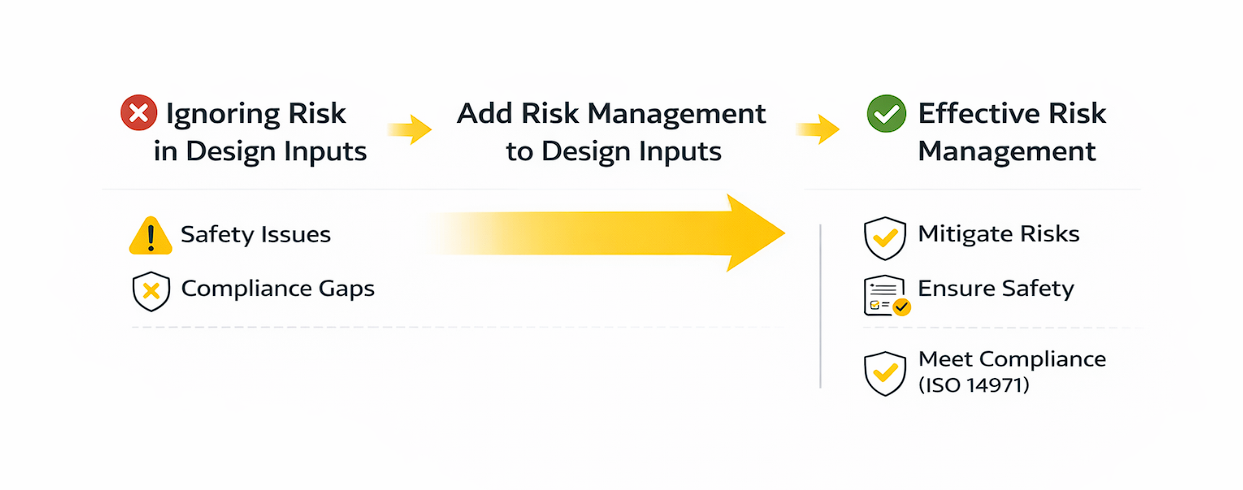
Risk management is a core expectation under EU regulations, particularly aligned with ISO 14971. When design inputs fail to address identified risks, it creates serious compliance gaps.
Sometimes risks are documented separately but not translated into actual design requirements.
Why this is risky:
- Safety issues remain unaddressed
- Non-compliance during regulatory review
- Increased likelihood of product failure
What should be done instead:
Design inputs should actively reflect risk control measures.
- Integrate mitigation strategies into requirements
- Ensure high-risk areas are clearly addressed
- Align inputs with risk management documentation
This ensures that safety is built into the product—not added later.
7. Static Requirements That Don’t Evolve
In fast-moving development environments, requirements cannot remain static. As new data, testing results, or user feedback emerge, design inputs must adapt.
However, many teams define requirements once and never revisit them.
What this causes:
- Misalignment with actual product performance
- Outdated documentation
- Increased compliance risks during scaling
How to stay flexible:
Requirements should be managed as living documents within a controlled system.
- Implement change control processes
- Regularly review and update requirements
- Maintain version history and justification for changes
This approach ensures that your design inputs remain relevant and compliant throughout the product lifecycle.
Final Thoughts
In the EU regulatory environment, strong design inputs are not optional—they are essential for successful verification, validation, and market access. The difference between a requirement that “looks good” and one that actually works often comes down to clarity, measurability, and traceability.
By avoiding vague language, unrealistic expectations, and disconnected inputs, companies can significantly reduce compliance risks and improve development efficiency. More importantly, well-structured requirements create a smoother path to scaling, helping organizations move confidently from concept to market.
For companies looking to strengthen their design inputs and align with EU regulatory expectations, expert support can make a meaningful difference. Yallow LifeScience helps organizations refine requirements, improve compliance frameworks, and build scalable systems that support long-term success.